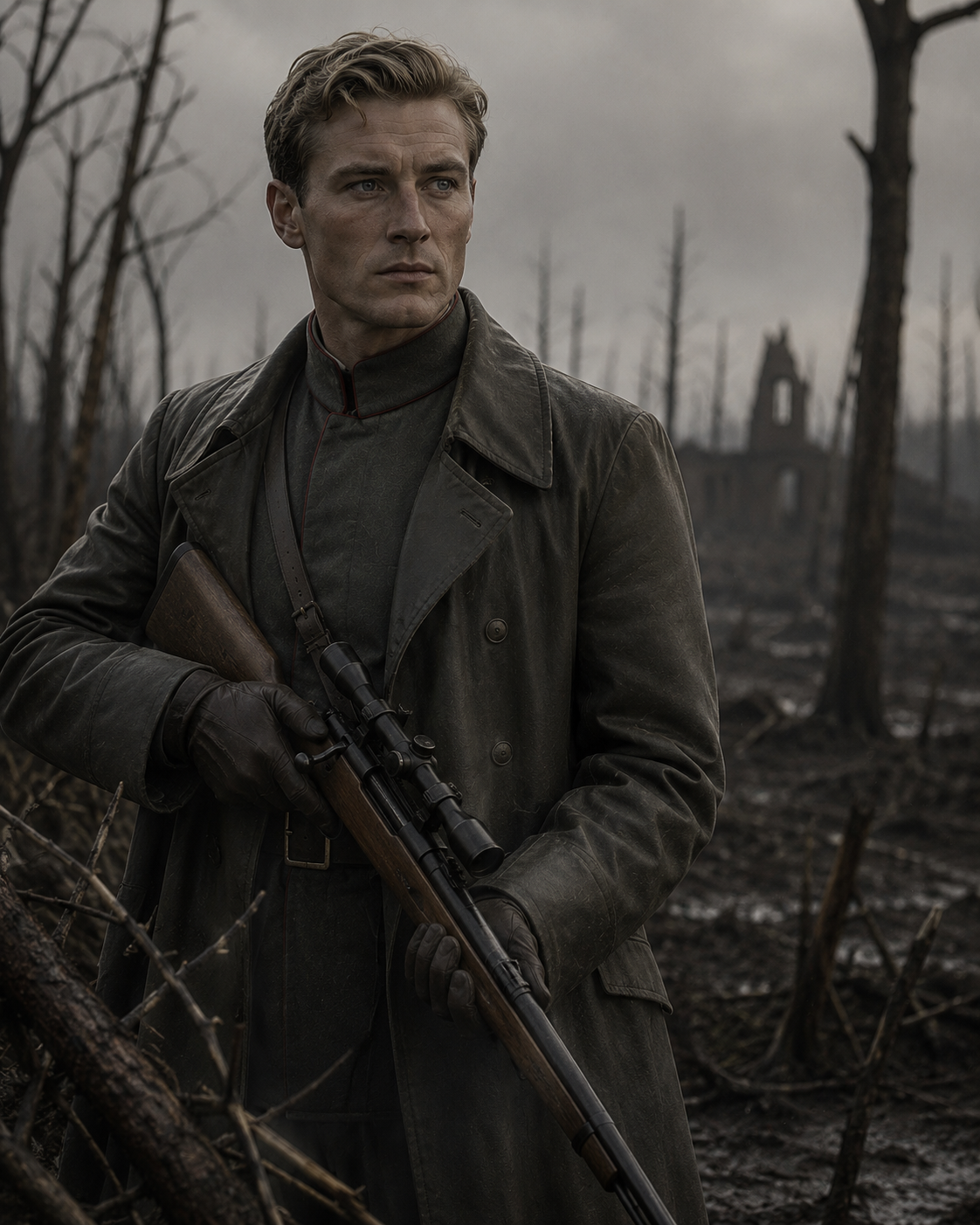
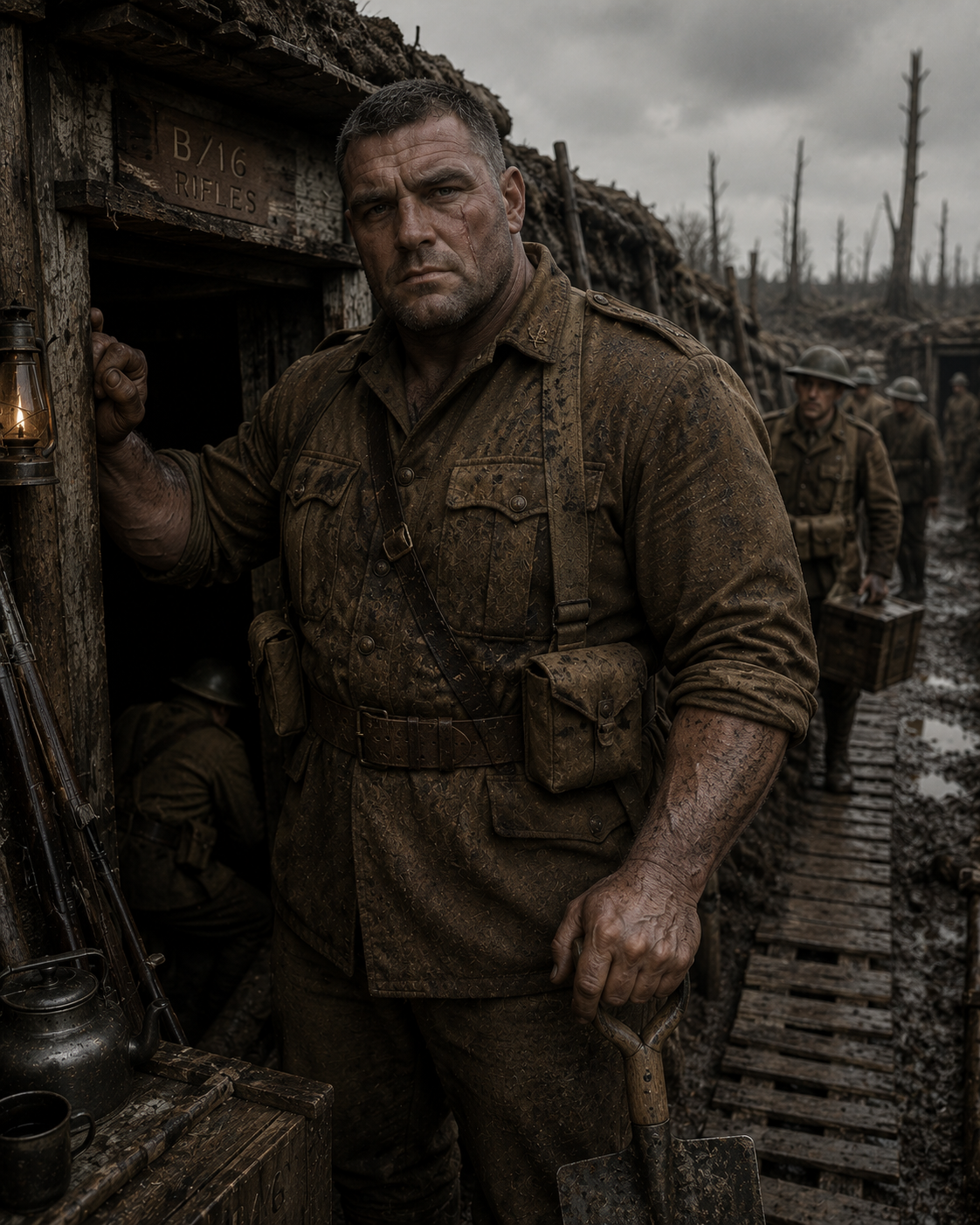
PAGE: mkirk-wrath.html2026-07-31: REBUILT end-to-end per Matt's formal 14-section Build Prompt ("The Wrath of Archie Ellis" – ARC Landing Page). Replaces the earlier iterative version. Changes: added the required "A Note on Content" advisory directly under the meta bar (verbatim, unedited, per the guardrail that it must not be softened); rewrote the About-the-Book prose/pull-quote/sidebar to the prompt's exact copy and added the new "The Architecture, If You Want It" mênis/kleos/thumos/nostos module; expanded the "Shelve Under" sidebar with Companion/Format Note/Content/Length rows; rewrote the Two Officers cards with the fuller Ellis/Eck copy (Nelson/Trafalgar detail folded into Ellis's card, Clara/Dresden detail folded into Eck's – both now inline instead of only living in the author's note); added a new "The Ground" section (Third Ypres campaign geography – map image is a placeholder, no real map file has been supplied yet); added an optional new "The Company" supporting-cast strip (six names/ranks the prompt supplied – no portrait photos supplied yet, so these are placeholder avatars, not invented images); replaced the long-form author's note built 2026-07-30 with the prompt's condensed ~260-word version (the long version is intentionally NOT run on this page per the prompt's own instruction – it belongs in the book's front matter / its own page if Matt wants one built later); added a new "More to Explore" two-card module (Teacher Supplement + a not-yet-built "Reader's Companion," which per the prompt's own fallback currently routes to "Request an ARC" instead of a dead link); retired the standalone "daughter banner" Teacher Supplement teaser since "More to Explore" now covers that same job. Per the prompt's content guardrails: no cast-to-Homer key, no chapter-by-chapter Homer map, and no Lexile/reading-level figure appear anywhere on this page. 2026-07-31, later: wired real photos into 5 of 6 "The Company" thumbnails per Matt's filename confirmation – char_wrath_cross/mannon/sayers/friemer/norris.png (Clarence Kalch still has no matching photo and stays initials-only). Matt's screenshot also listed several other "C - " files (Apollern/Doyle/Jacks/Jove/Paris/Sarp/Call) – he confirmed these are bio cards for the book's Homeric counterparts (Apollo, Diomedes, Ajax, Zeus, Paris, Sarpedon, and Calchas respectively), not Company photos, and per the content guardrails a full character-to-Homer key is exactly what's NOT allowed on this page – so none of those are used here. Skipped the "Ellis 2" alternate photo per Matt's note. Decided (per Matt): Doyle will replace Kalch in the Company row rather than sit alongside him – awaiting Doyle's full name/rank/filename before that swap is made; Kalch's entry is untouched for now. 2026-07-31, later still: wired the real campaign map (assets/map_ypres.png) into "The Ground" – swapped the plain placeholder div for an img with the same has-photo/onerror-fallback pattern used on The Company avatars. 2026-07-31, later still: Matt sent the full cast roster (~22 named characters, British and German) so Doyle's and Sarp's rank/name details could be pulled from it – Doyle (Lieutenant Baldwin Doyle) now replaces Kalch's slot, and Sarp (Hauptmann Stefan Sarp) was added as a 7th entry, both with real photos (char_wrath_doyle.png / char_wrath_sarp.png – filenames assumed to match the established convention, confirm/rename if different). Deliberately did NOT publish the rest of that roster on this page: several entries include plot-adjacent detail ("wounded in an earlier engagement," "sector was overrun earlier in the war," etc.) and the full list runs well past "a handful of named supporting cast," which is what the Build Prompt's own guardrails call safe here – the complete cast belongs in the spoiler-gated back matter, not this landing page. "Paris" (the remaining name from Matt's original Homer-counterpart screenshot) wasn't in the roster he sent, so he hasn't been added – need his name/rank before he can be. 2026-07-31, later still: Matt clarified "Paris" is Leutnant Alexander Parr (the "C - Paris.png" file was named for the Homeric counterpart, not the character's actual surname) – added him, plus Company Sergeant Major Stanley Jacks (already in the roster, Matt asked for him by his "Jacks/Ajax" filename shorthand), both with real photos (char_wrath_parr.png / char_wrath_jacks.png – filenames assumed, confirm/rename if different). The Company row is now 9 entries: Cross, Mannon, Sayers, Friemer, Norris, Doyle, Sarp, Parr, Jacks. 2026-07-31, later still: Matt gave the FULL 47-entry cast-to-Homer key (saved to the project as claude/wrath-cast-to-homer-key.md for future use, e.g. the Reader's Companion) and then explicitly asked to reveal the Cast row's own analogs on this live page – confirmed via direct question before doing it, since this reverses the earlier statement just above that no cast-to-Homer key appears on this page. That statement is no longer accurate for the 9 Cast entries specifically: each now shows its analog (Cross/Patroclus, Mannon/Agamemnon, Sayers/Odysseus, Friemer/Priam, Norris/Nestor, Doyle/Diomedes, Sarp/Sarpedon, Parr/Paris, Jacks/Telamonian Ajax) – treat this as the same category of "safe" reveal as Ellis/Eck's Achilles/Hector labels already on the page, not a full spoiler-gated back-matter dump. The other ~38 names from the full roster Matt sent are still NOT on this page. 2026-07-31, later still: swapped in Matt's freshly-drafted "Page Copy: Wrath" doc – new canonical tagline ("A novel of Ypres, 1917," replacing the earlier "A retelling of the Iliad" line; his longer draft "a retelling of the Iliad, fought in the mud of Ypres, 1917" was explicitly flagged as undecided, so it was NOT used); replaced the About-the-Book prose and pull-quote with his new Standard-version copy (Achilles/Hector framing, "the Trojan side gets the same dignity Homer gave it" as the new pull-quote); added a new "About This Novel" subsection using his Longer-version copy (51 days vs. 103 days, Homeric structure as argument not decoration). Also fixed two punctuation spots per his house-style note (colons/commas in place of non-numeric-range en dashes) in the Teaching Wrath callout card.

Literary Fiction · Historical

The Wrath ofArchie Ellis

A novel of Ypres, 1917

Pre-sale · Releasing October 1

The book is built, chapter for chapter, on the structure of the Iliad: Ellis is Achilles, Eck is Hector.
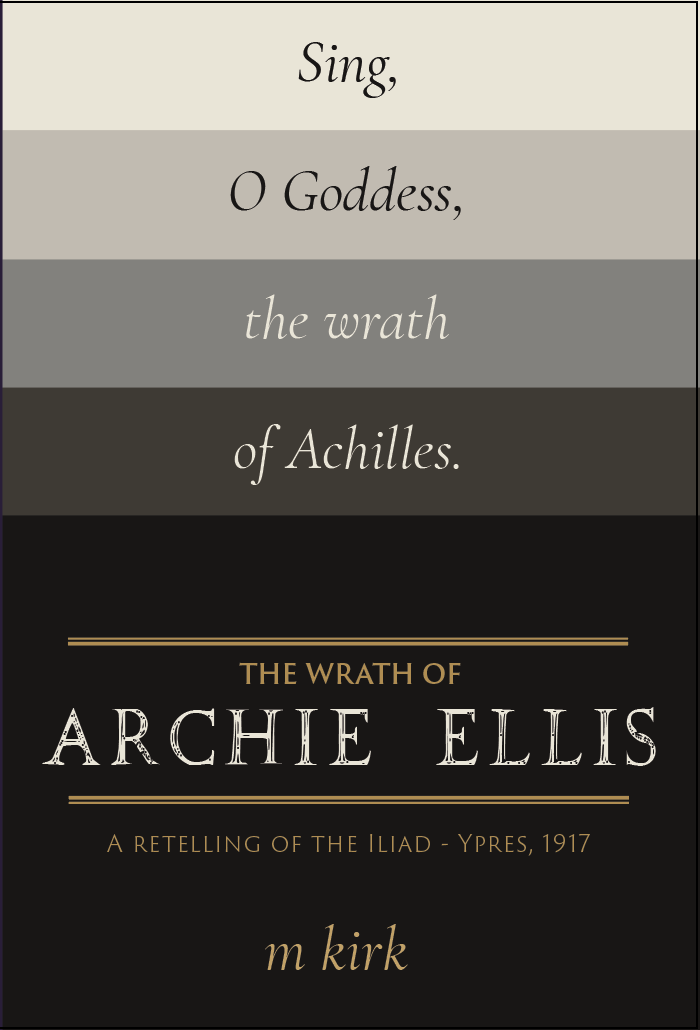
The Wrath of Archie Ellis – book cover

Publishes 1 October 2026 · ISBN 979-8-9961025-0-1
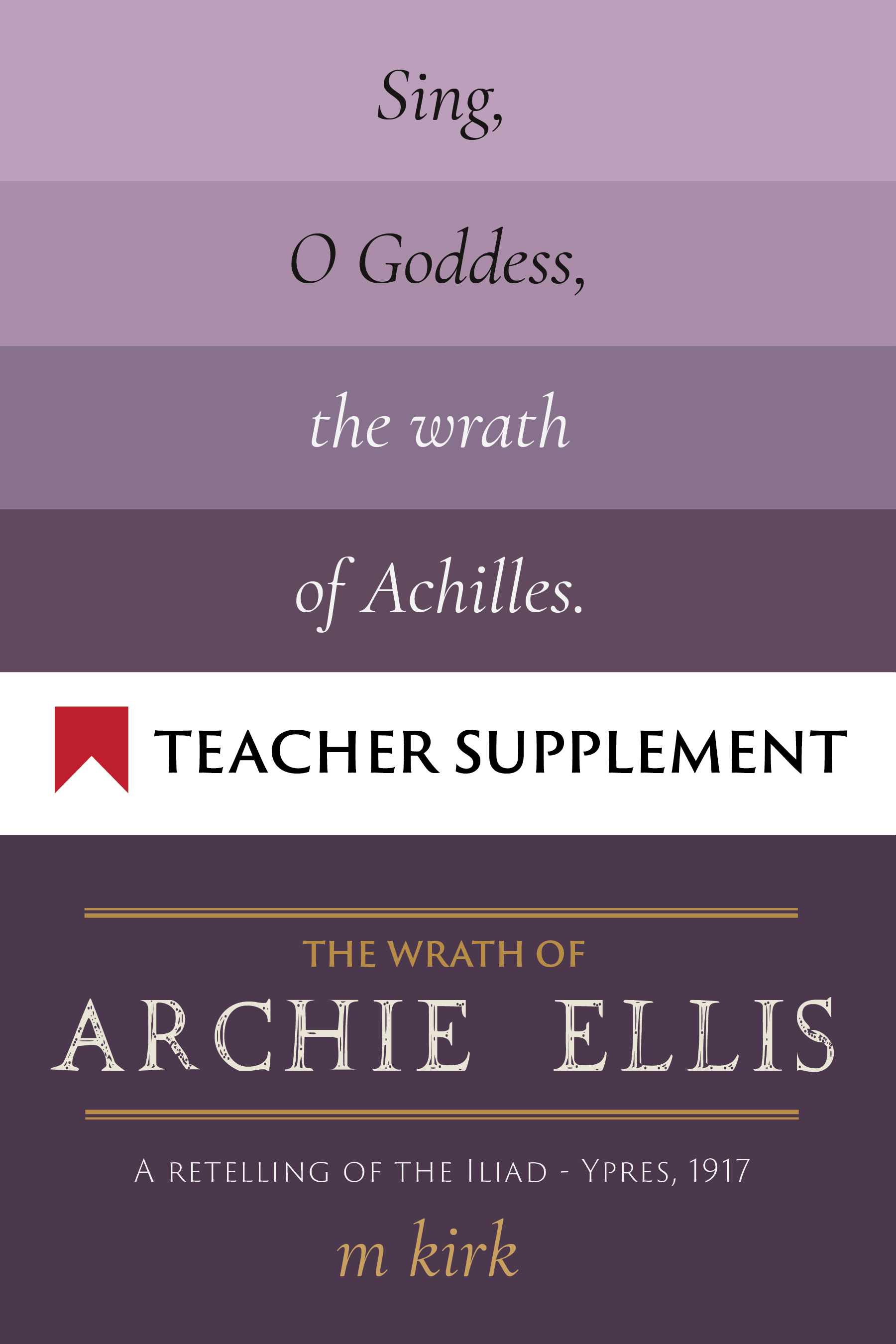
Teaching Wrath – A Companion for the Classroom, book cover
Teaching Wrath

Teaching Wrath: A Companion for the Classroom

A full teaching companion for The Wrath of Archie Ellis: chapter-by-chapter notes, tiered discussion questions, content advisories, and a standards-aligned unit framework for grades 7–12.

  • 88 pages, plus a standalone handout packet: glossary, Iliad primer, WWI timeline, teaching map, and more.
  • Three pacing options and a three-band system, from a 7th-grade elective to an AP seminar.
View Companion →
Status
Pre-sale · Oct 1, 2026
Format
Paperback / Kindle
Genre
Literary Fiction · Historical
A Note on Content

The novel does not shy away from the violence of the First World War, including combat deaths, but nothing is rendered graphically. There is no profanity and no sexual content.

Two officers.
Opposite sides of the wire.

The Wrath of Archie Ellis is a novel of the Third Battle of Ypres, built as a structural parallel to Homer's Iliad: twenty-four chapters against twenty-four books, in four parts that track the poem's own arc from wrath through breach and death to ransom.

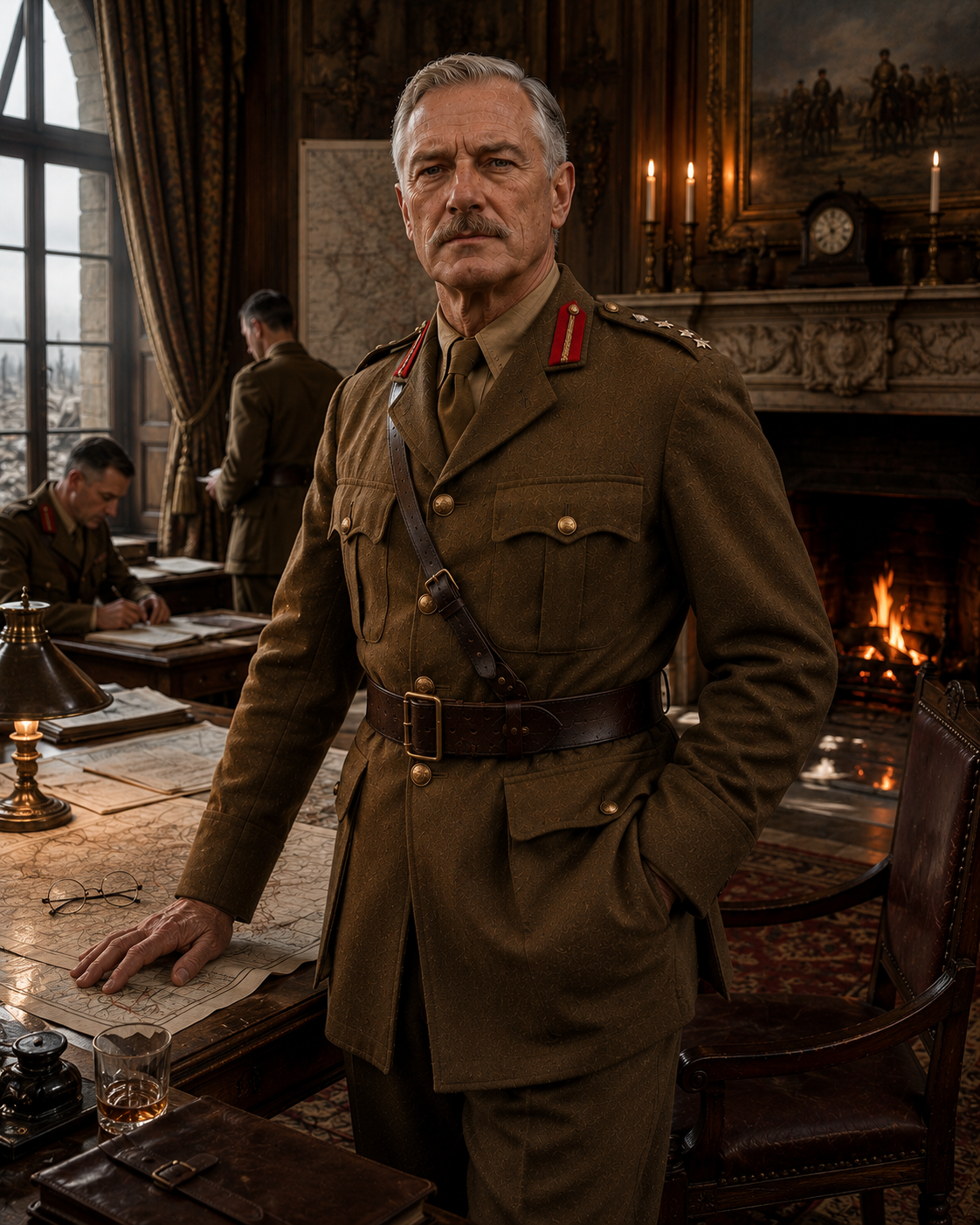
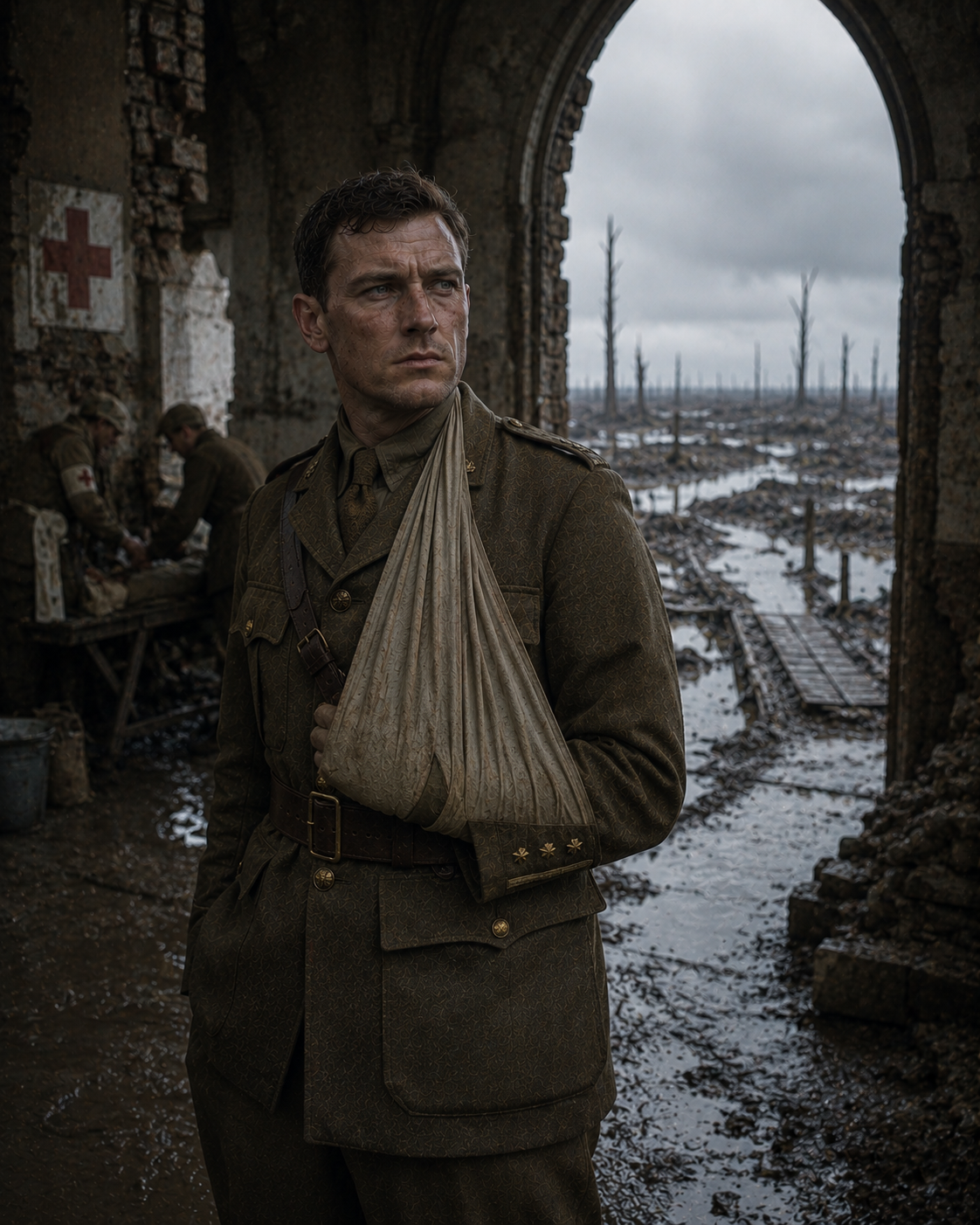
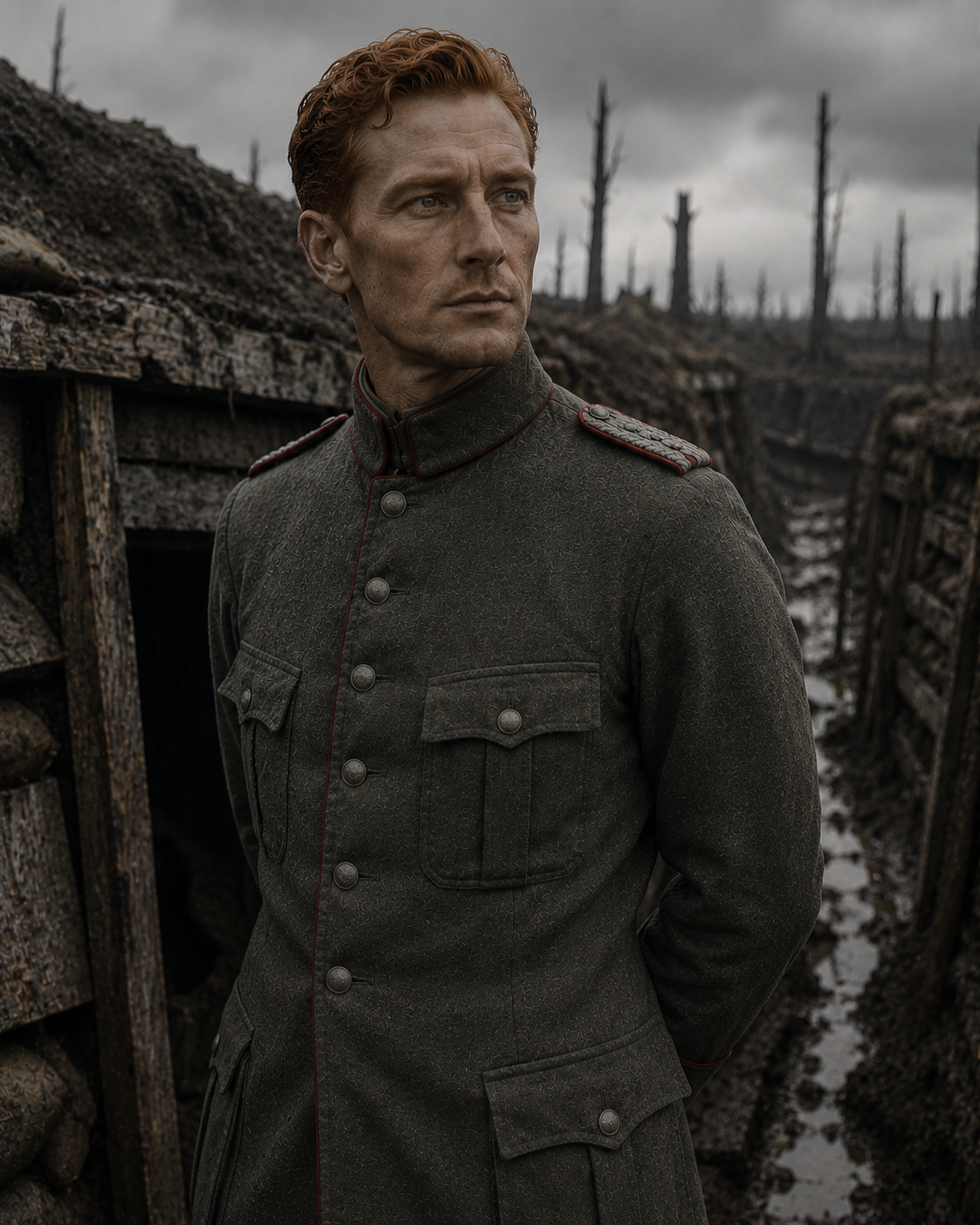
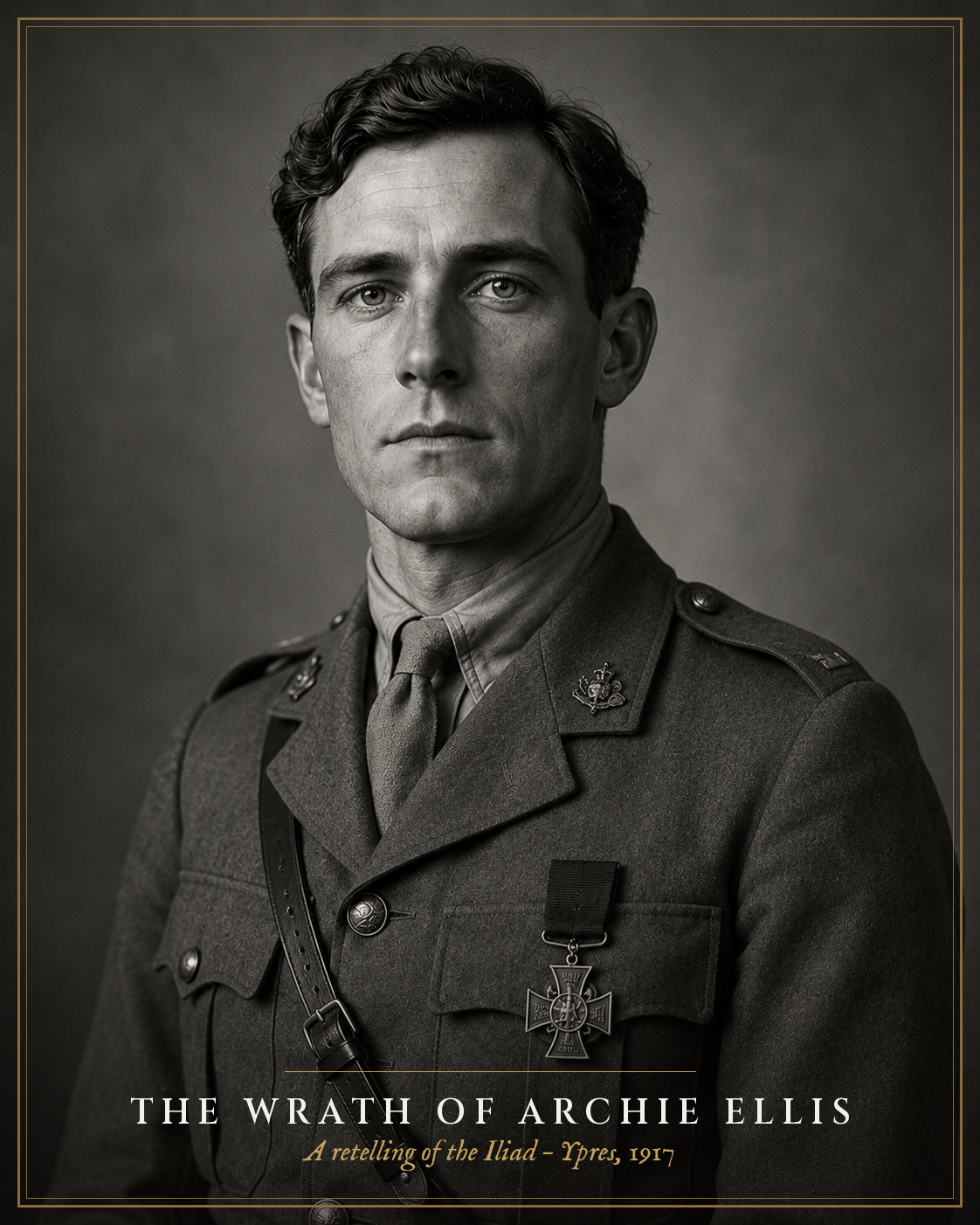
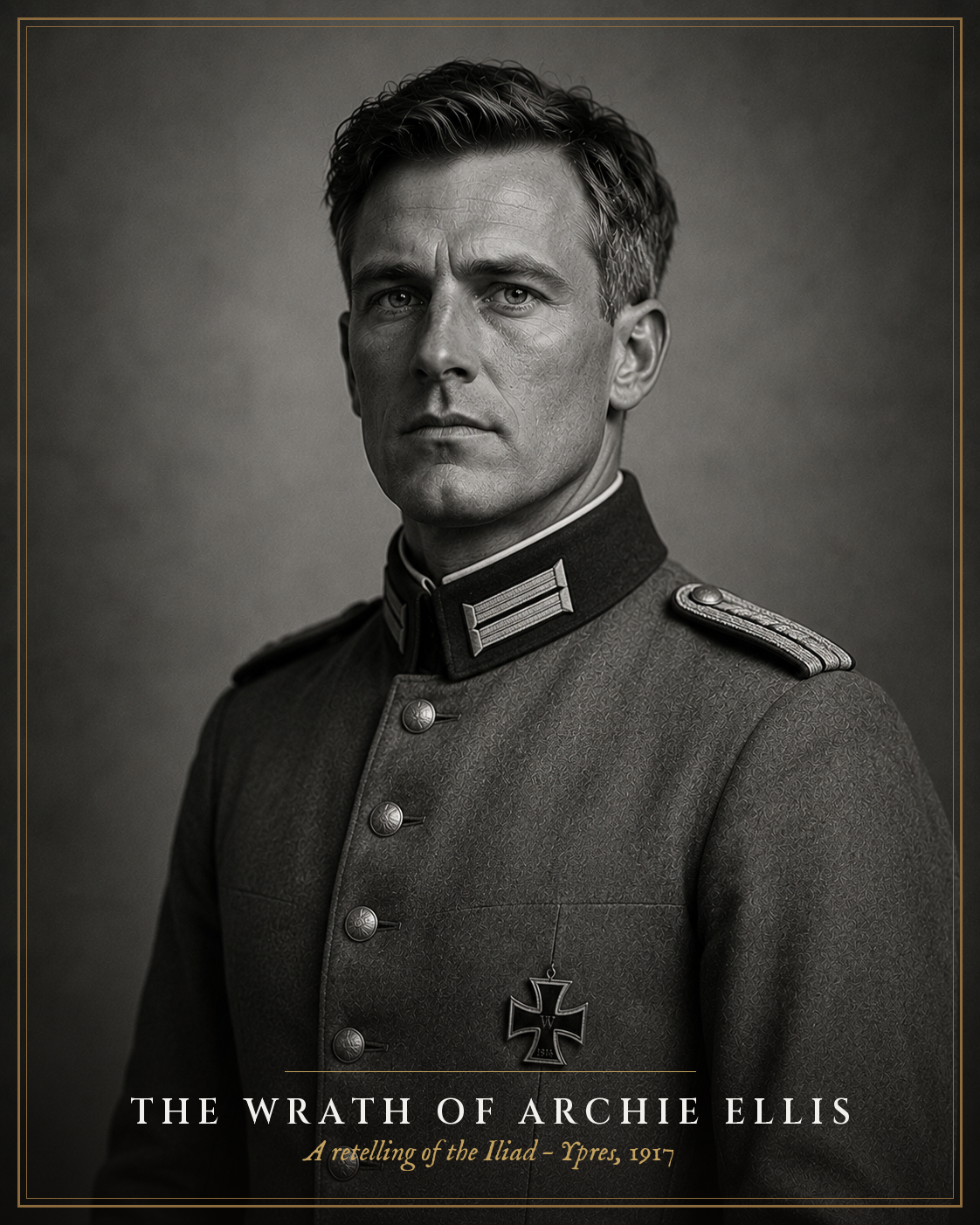
Captain Ellis is the Achilles of the Salient: the best officer in it, defined by fury and by a half-conscious certainty that he has chosen the short, glorious life. Across the wire, Hauptmann Eck is Hector: a Cologne engineer who builds bridges in peacetime and holds a regiment together in this one, and the moral centre the novel is built around. The book's argument depends on Eck being as fully alive on the page as Ellis.

The Trojan side gets the same dignity Homer gave it. That is not a gesture. It is the spine of the book.

The novel does not editorialise. It watches. Efficiency and bodies sit in the same sentence, told the same way, and that plainness is the most serious thing the book does. Where Homer's gods intervened, this war runs without them, on paper and on timetables, and what nobility survives has to be found by the men themselves, inside conditions built to strip it out of them.

It ends the way it has to: at 2 a.m., before dawn, in a dugout at B7, in a scene that is almost entirely silence and what two men do with their hands.

The Architecture, If You Want It
mênis
the wrath of a hero whose honour has been violated
kleos
the fame that outlives the man who earned it
thumos
the will to act, more force than feeling
nostos
the homecoming, or its refusal

The novel runs on these four terms. It never names them. The prose itself leans on Greek-rooted vocabulary throughout, deliberately, word by word.

Homer's Iliad is fifty-one days near the end of a ten-year siege. The Wrath of Archie Ellis is a hundred and three days, the length of the real Third Battle of Ypres, inside the fourth year of a war that by then no one alive could remember the start of. The compression is the same, even where the proportions aren't: both books are asking what a long war does to the men who are still, somehow, fighting it as though it were a short one.

The Homeric structure here is not a decoration laid over a war novel. It is the argument. Each chapter has a counterpart in the Iliad, and each one measures the gap between what that counterpart assumed, an audience for courage, a code both sides observed, a death that meant something to the men who caused it, and what this war actually delivered instead. Some chapters keep Homer's shape. Some invert it. Some empty it out entirely and replace it with a mundane, uncounterparted failure: a supply delay, a training accident, the kind of death that has no Homeric original because Homer's war didn't produce that kind of death.

The novel was written for a reader who has never opened the Iliad as much as for one who has. It should read, first, as a war novel: Ellis and Eck, the men around them, the hundred and three days of Passchendaele. The classical bones are there to be felt underneath that story, not admired instead of it.

For readers of Pat Barker's Regeneration, Sebastian Faulks's Birdsong, and Madeline Miller's The Song of Achilles.
Shelve Under
Literary Fiction War Fiction Historical Fiction WWI · Ypres 1917 Iliad Retelling Dual POV
Publication Date
October 1, 2026
Format
Paperback · Kindle
Structure
Dual close POV – Iliad structure
Companion
24 chapters mapped to Homer + the war poets
Format Note
A blank page for notes follows every chapter
Content
No graphic violence · no profanity · no sexual content
Length
~70,000 words
ISBN-13
979-8-9961025-0-1
Buy on Amazon Request an ARC
I
Archie Ellis
Placeholder photoArchie Ellis
Achilles

Archie Ellis

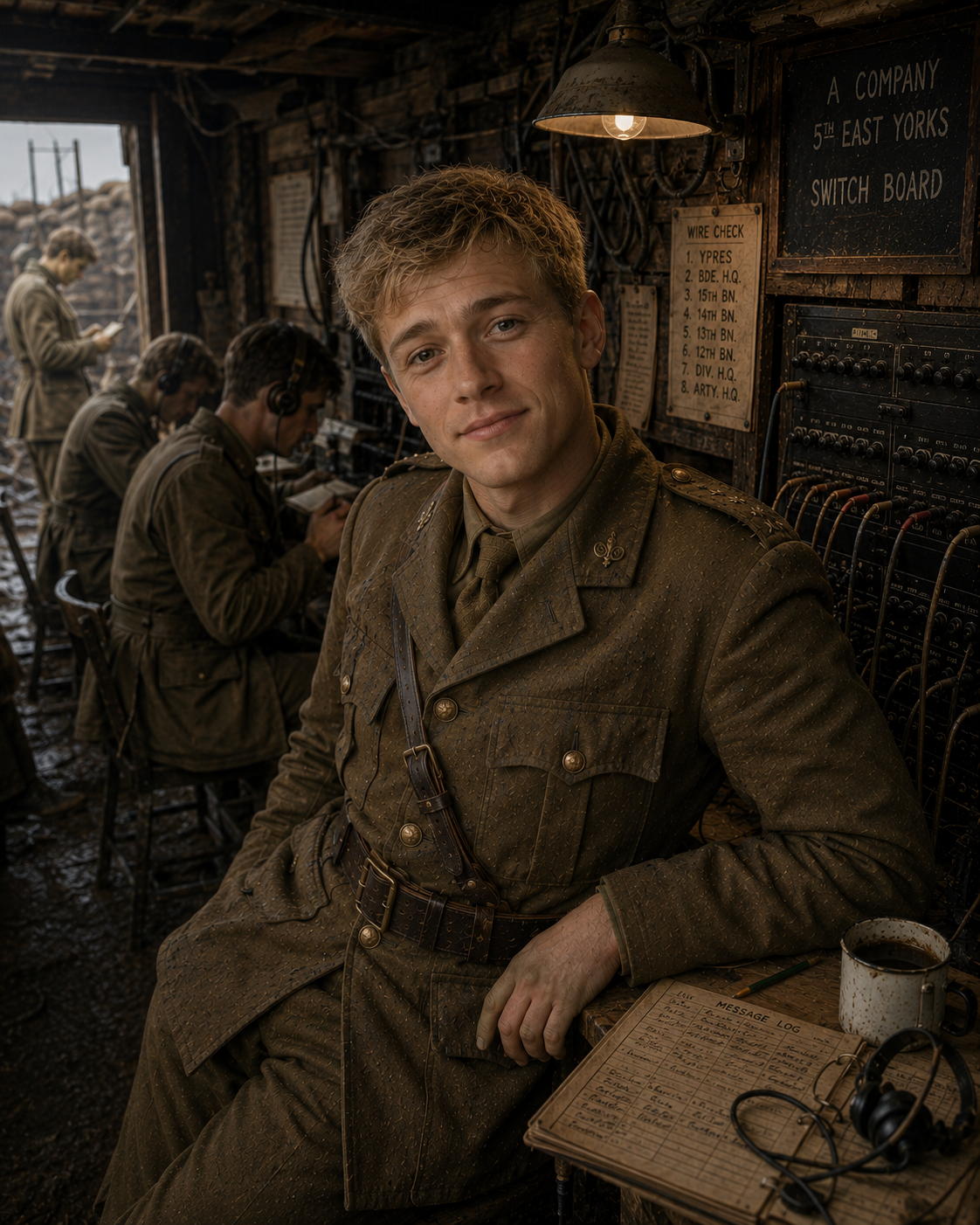
Captain, B Company. Victoria Cross recipient. 1912 Olympic gold medalist. Built from two real men: Admiral Nelson supplies the wrath – at Trafalgar he went into battle with four orders of chivalry sewn to his coat, which is how a French marksman picked him out and killed him. Ellis wears his ribbons into action the same way. The finest officer in the Salient – until an order he refuses to follow costs two hundred and forty-seven men their lives.

POV Character
II
Harald Eck
Placeholder photoHarald Eck
Hector

Harald Eck

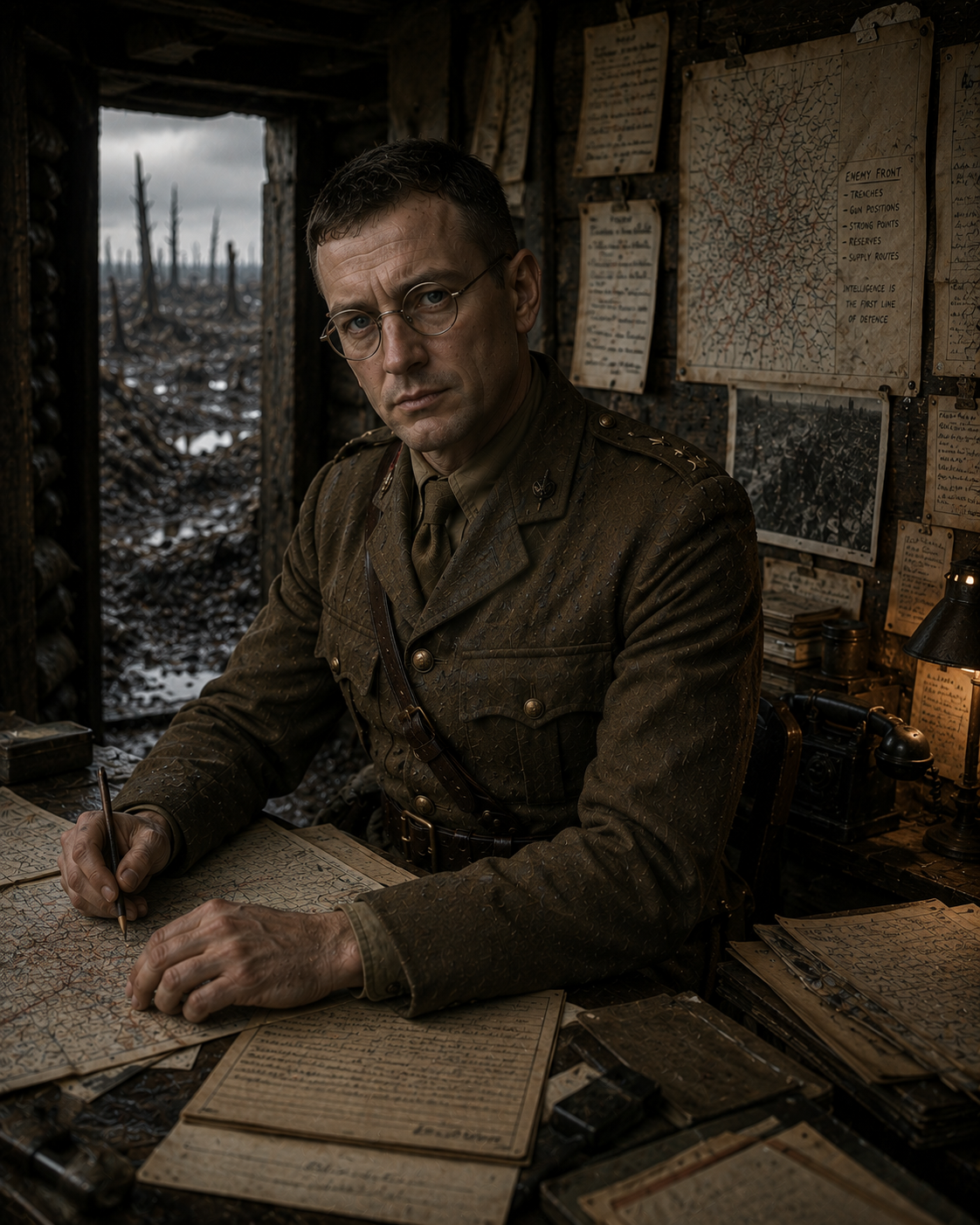
Hauptmann. Forty-one, a civil engineer from Dresden, fifteen years into building bridges and lock gates when the mobilization orders came. He left his plans on the drafting table, told his wife Clara he'd be back before anything needed deciding, and went. He has known for weeks what's coming. He is holding his regiment together anyway.

POV Character

Third Ypres, Autumn 1917

The novel follows the real campaign, phase by phase: Pilckem Ridge on 31 July, the Menin Road and Broodseinde through September and October, Passchendaele itself in early November. The battalion's farmhouse headquarters at Vlamertinghe, the forward dugout at B7, the ridge at Zonnebeke – every position in the book sits on ground you can still find on a map today.
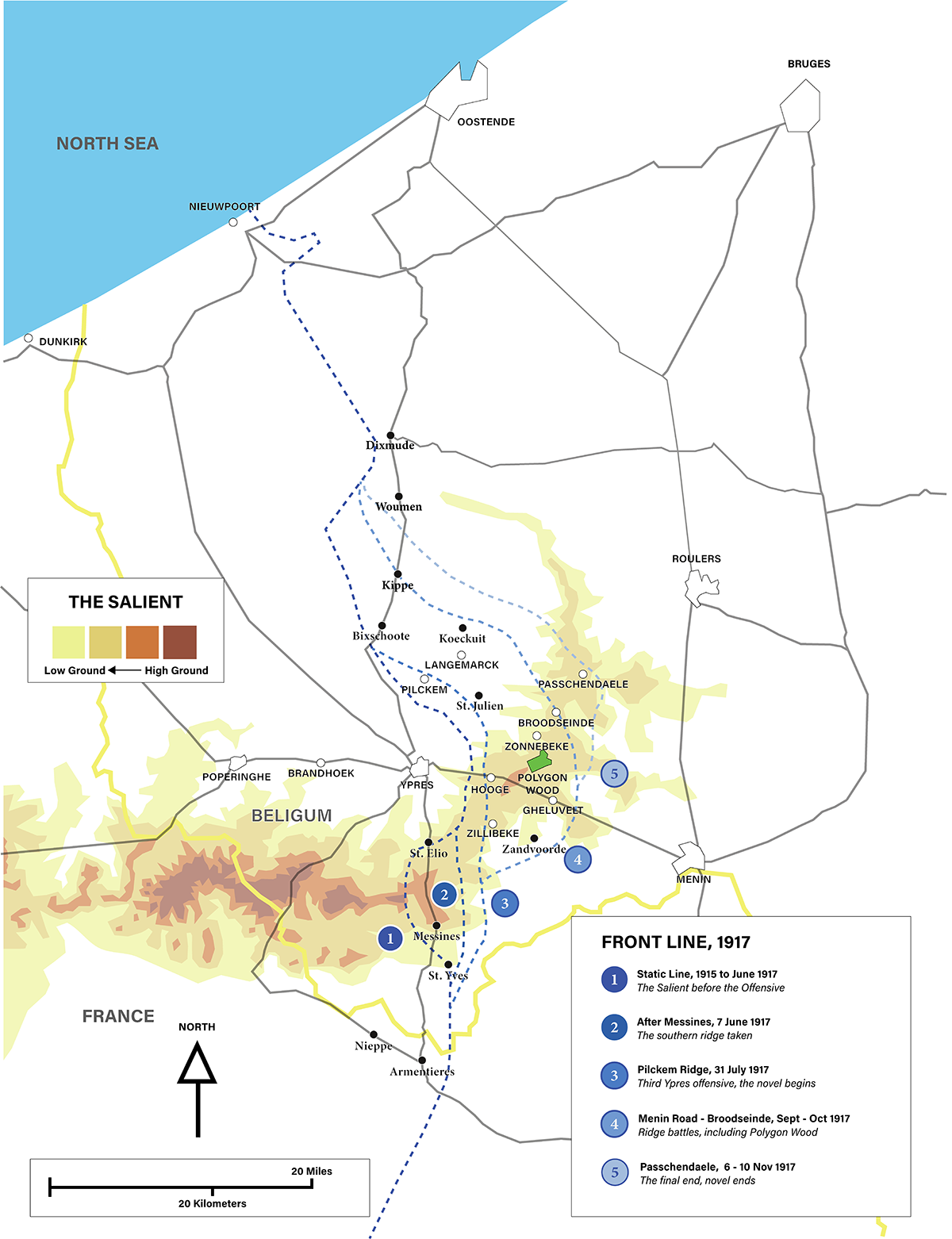
Campaign map – Third Ypres, 1917
Timeline · Third Ypres, 1917
  1. 131 Jul–2 AugBattle of Pilckem Ridge
  2. 216–18 AugBattle of Langemarck
  3. 320–25 SepBattle of the Menin Road Ridge
  4. 426 Sep–3 OctBattle of Polygon Wood
  5. 54 OctBattle of Broodseinde
  6. 69 OctBattle of Poelcappelle
  7. 712 OctFirst Battle of Passchendaele
  8. 826 Oct–10 NovSecond Battle of Passchendaele – village taken, campaign ends
Clement Cross
Clement Cross
Lieutenant
Patroclus
Arthur Mannon
Arthur Mannon
Colonel
Agamemnon
Alden Sayers
Alden Sayers
Major
Odysseus
Aldous Friemer
Aldous Friemer
Oberst
Priam
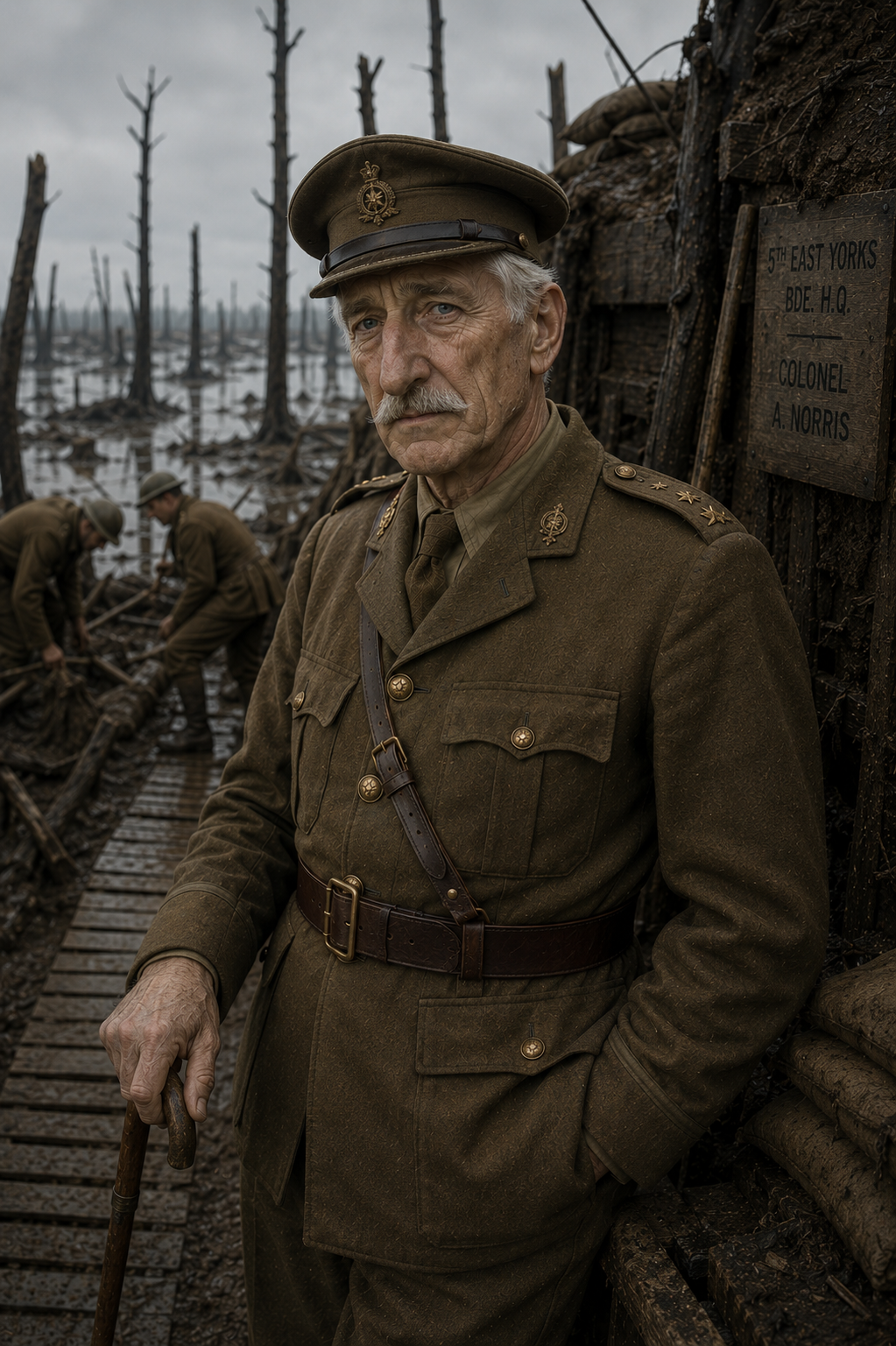
Conrad Norris
Conrad Norris
Colonel
Nestor
Baldwin Doyle
Baldwin Doyle
Lieutenant
Diomedes
Stefan Sarp
Stefan Sarp
Hauptmann
Sarpedon
Alexander Parr
Alexander Parr
Leutnant
Paris
Stanley Jacks
Stanley Jacks
Company Sergeant Major
Telamonian Ajax
m kirk

A note on what follows: I wrote this novel, and the guide that accompanies it, with a classroom in mind – a way to meet a young reader encountering Homer and the First World War for the first time. But the story doesn't belong only to that reader, any more than the Iliad it's built from does. Homer has outlasted every audience he was ever written for. Pride and what it costs the people around it. Grief with nowhere to go. What's owed to an enemy once he can no longer harm you. What a war is said to have accomplished, against what it actually cost. These aren't young readers' questions. They're everyone's.

I've taught thirteen-year-olds about ancient civilizations and the First World War for twenty years. The longer I taught both, the more convinced I became they were the same story: what happens when a world becomes very connected, and then, under pressure, cracks all at once. About the kind of men those worlds produce, and what those men are and aren't prepared for. About honor, and what it costs, and who pays.

One small design choice comes straight from the classroom: every chapter ends with a blank page. It's the kind of space I always wished the books I taught from had – room to write down the thought you had while it was still yours.

You have lived through a pandemic. You've watched wars start in places you'd never heard of a year before, and supply chains break for reasons that seemed to come from nowhere. None of that felt like ancient history while it was happening. It felt like Tuesday.

This novel is about two men on opposite sides of a strand of barbed wire, in a small piece of Belgium, in 1917 – carrying, into an industrial war neither of them was built for, values that belong to a much older one. It is the oldest story there is, and it keeps not staying in the past.

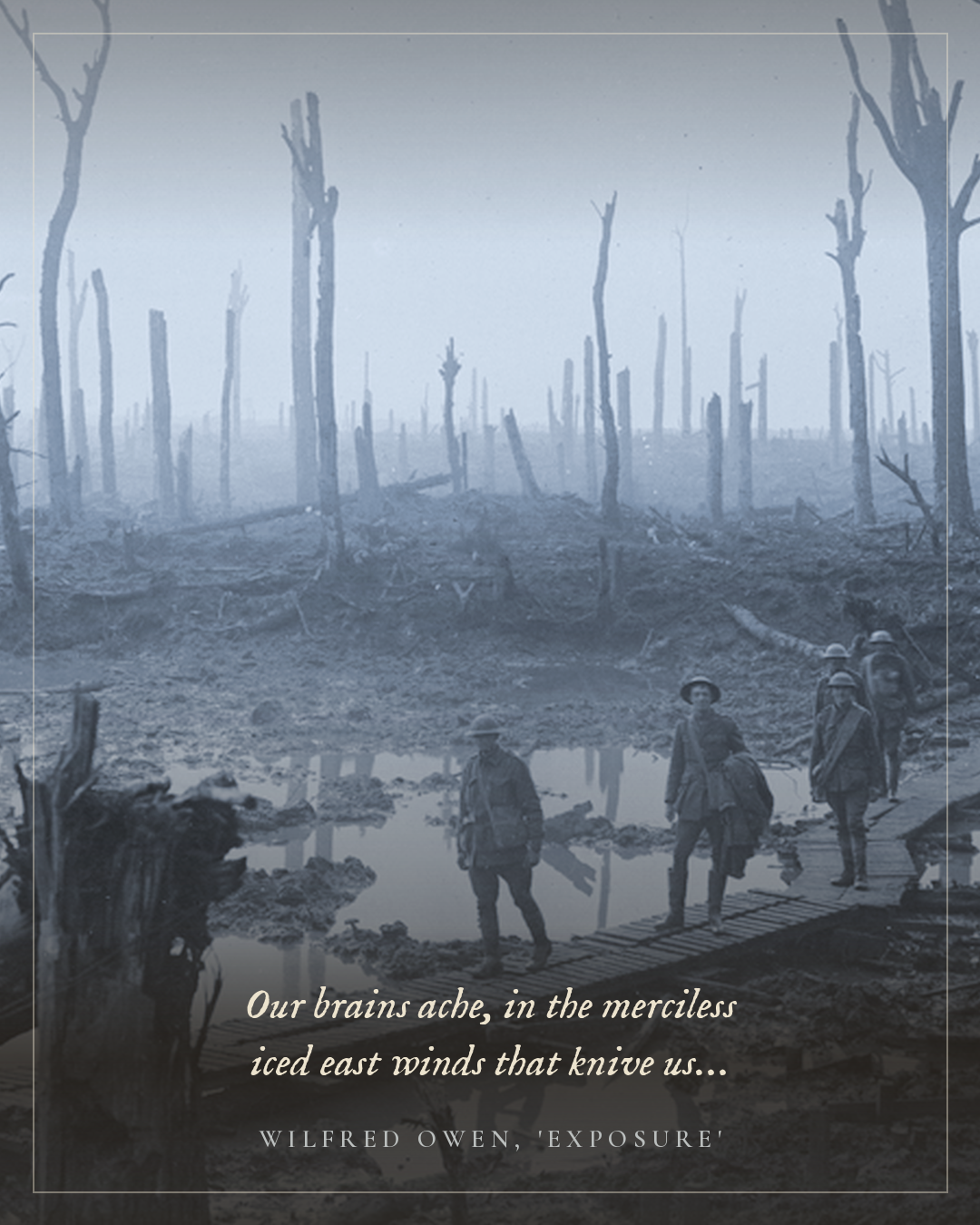
The prose is deliberately plain. No elevated language, no narrator telling you how to feel about a death. That flatness isn't coldness – it's the form the material demands. As Wilfred Owen, one of the war's own poets, put it: the poetry is in the pity, and the pity is in the accuracy.

– m kirk